

You can use a teacher, coach, internship manager, volunteer lead, guidance counselor, or a family friend you have actually worked with as a reference for a first job. Hiring managers do not expect a long employment history. They do expect someone independent who can describe your reliability, character, and how you handle responsibility.
Applicants for a first job are often an unknown quantity. They have not had much paid work, so it is hard to quantify their potential. That is why references matter, and why they can decide a close race. If the hiring manager can read both a character reference and a professional one, they have something besides your interview stories to go on.
This guide covers why references matter, who you can ask, and how to request a reference without making it awkward. Pair it with how to make a resume for a first job and how to list references on a resume so the names you gather actually get used the right way.
Expert tip
Why do I need a reference for a first job? If you are competing against other first-time applicants, a clear, positive reference can be the independent proof that you will show up and do the work. You will not have a long record of jobs, so make the few voices you do have count.
Why are references important?
References are important because they let a hiring manager check your stories with someone who has seen you work, learn, or lead, instead of taking your interview at face value. Showing up to a first-job interview with no one they can call makes you look unprepared, even if the rest of the application is strong.
Checking career stories is easier when you have a longer work history. First-job employers still want a deeper look at character and potential. They have hired many new starters before, and they know that formal references usually line up with later performance.
A hiring mistake at this level may not wreck a company's finances, but it can dent team morale and slow the work. References help them choose with more than a gut feeling.
Expert tip
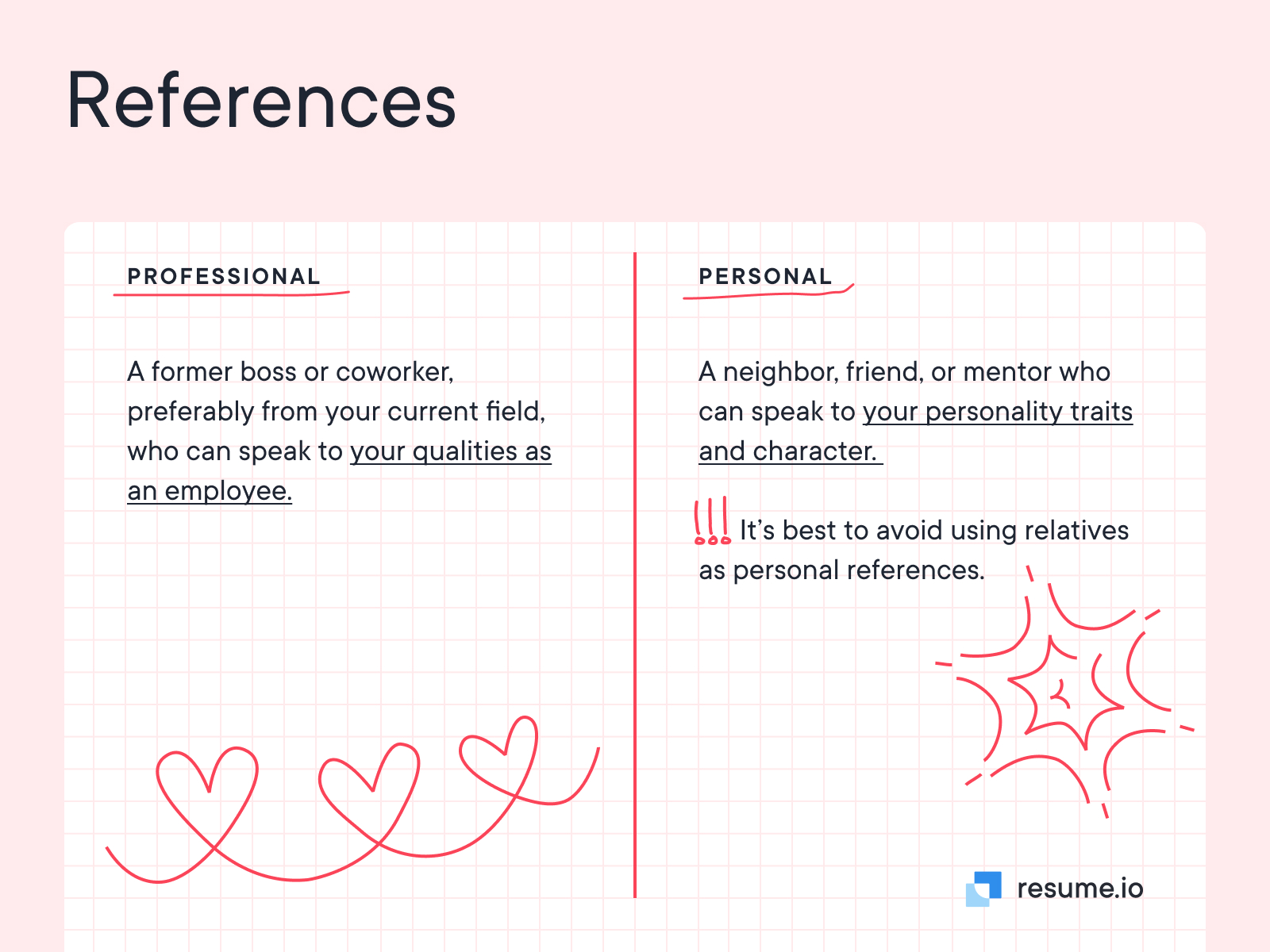
Should it be a character reference or a professional reference? Ideally, supply two: one of each. Character references come from people who know you well and have seen you take responsibility. Professional references for a first job often come from work placements, internships, or volunteering.
Who can I use as a reference for my first job?
You can use more people than you think: internship or placement managers, teachers, coaches, family friends you have worked with, youth-activity leaders, volunteer organizers, and guidance counselors. Hiring managers will not expect a deep professional network. They will notice whether your referees make sense for the role.
Your choice of referee, and what they write, says something about how well you understand the job. Pick people who can be specific. Skip anyone who will only say you are “a great kid.”
Work placement / internship manager
A work placement or internship manager is one of the strongest first-job references, even if the stint was short, because they saw you in a workplace. A brief stretch of professional (paid or structured) experience usually carries more weight than a personal character note.
Make sure the placement is relatively recent and that it used a mix of responsibilities and soft skills that match the job you want. An internship supervisor who can describe how you handled a deadline is more useful than a famous name who barely remembers you.
Favorite teacher or sports coach
A teacher or sports coach can be a strong first-job reference when they know how you show up under pressure, not just that they liked having you in class. Schoolwork and sport both demand focus, practice, and teamwork — the same habits early-career jobs need.
These people write references often and are usually glad to mark a relationship that went well. Their letter is also a record of how they invested in you. Ask the teacher who saw your work ethic, not only the one who gave you the highest grade.
Family friend you have worked with
A family friend is an acceptable first-job reference if you have actually worked with them — lawn care, childcare, a small-business Saturday — and you are open about the relationship. Have them be specific about where you added value, not vague about how long they have known your parents.
Family friends often take the time to write the exact kind of reference you need. Never ask them to invent work you did not do. If an employer senses that the story is off, the application is usually over. Do not list parents or siblings. That is not a gray area.
Leader from youth activities
A youth-activity leader can speak to who you are outside school: communication, influence, and teamwork in a setting you chose. Those formative hours often say more about early-career character than a single semester grade.
Scout leaders, debate coaches, band directors, and club advisors usually have stories. Ask the person who watched you run an event or hold a role, not someone who only collected permission slips. If those activities also belong on the page, see hobbies and interests for a resume.
Volunteering or charity organizer
A volunteering or charity organizer is a strong first-job reference because unpaid work still shows a work ethic. Showing up when nobody is paying you is exactly the habit a first employer needs in the opening months.
If you are enterprising, look up the hiring manager and see what they care about. Overlap is a bonus, not a requirement. The organizer should still describe what you did — hours, tasks, reliability — not only that you “cared about the cause.” Teens can also look at jobs for teens for roles that create this kind of referee.
Guidance counselor
A school or college guidance counselor can be a respected professional reference when they have spent enough time with you to speak to readiness, not just course selection. Employers hiring for a first job often want a read on whether you are psychologically ready to take the work seriously.
Counselors who have met you more than once can talk about follow-through, planning, and how you handle setbacks. If they only know you from a 15-minute scheduling chat, pick someone else.
Expert tip
What if I have no references? Saying you have none will not impress anyone. Doing the work to find two names shows the same effort you will bring in those first months. Never default to family. If you have made any impact outside the house — school, sport, volunteering, a neighbor's project — start there. Then build the rest of the application with a resume that works with no experience.
How to ask someone to be your reference
Ask early, give a short brief on the job, offer a conversation, and thank them afterward. How you request the reference changes the quality of what they write. A rushed, last-minute ask often produces a rushed, generic letter.
Ask politely, in advance
Ask as soon as you know the employer may call references, and give people a week or two to think — not six months, and not the night before. Too early and they forget. Too late and they dash something off.
A thoughtful first-job reference comes from unrushed preparation. Academic contacts get many requests, so make yours specific and polite. Also ask yourself whether this person actually wants to do it. A reluctant yes can be worse than a warm no. Keep references off the cover letter unless the posting demands them — see cover letter references.
Provide sufficient (but concise) background detail
Send a short note that names the job, what it involves, and why you think you fit. Referees write better letters when they understand the role. They do not need your full life story.
You can influence the content without scripting it. Mention two or three strengths you hope they can speak to, attach a current resume, and stop there. Enthusiasm is good. A five-page brief is not.
Offer to discuss the reference in person
Offer a short conversation, in person or on a video call, so they can ask what the employer is likely to want. People who like you usually want to help. They may also share interview tips you would not get from an email.
If they understand how much this first job matters, they write a better letter. A ten-minute chat is enough. Do not turn it into a rehearsal of the entire application.
Follow up with gratitude
Thank them after they agree, and again after you hear the outcome. Someone who wrote you a first-job reference is more likely to do it again if they felt the effort landed.
Tell them whether you got the job. People like knowing they made a difference. A two-line update is enough. Then keep the relationship warm so you are not only visible when you need something.
Expert tip
Request, do not demand. Even if someone is expected to give students references, be polite and helpful when you ask. The quality of the letter matters. A demanding tone is a reliable way to get a half-hearted one.
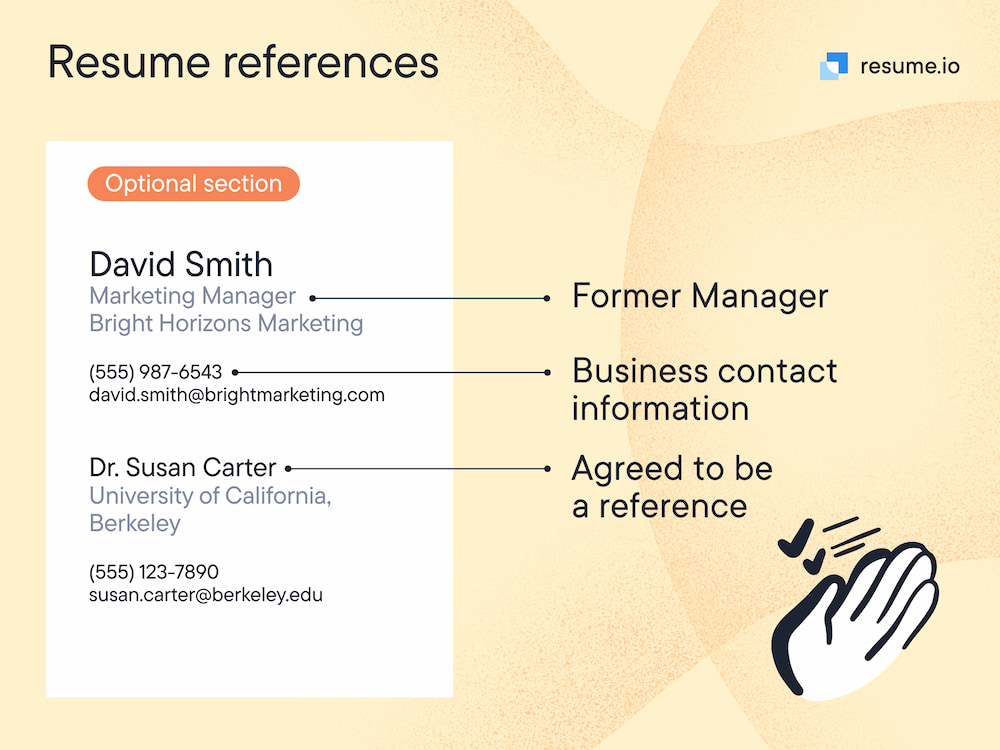
Once you have two people ready, write a career goal statement you can reuse in interviews. The same people who will vouch for you can often help you say where you want the first job to lead.
Tools & guides mentioned in this article
- AI Resume Builder
Build an ATS-ready resume with AI writing help and live preview.
- Resume Templates
Browse ATS-friendly layouts for every industry and career stage.
- Free ATS Checker
Upload your resume and get an instant ATS compatibility score.
- Free Resume Checker
Grade your resume's overall quality, bullet impact, and clarity for free.
- Career Advice Blog
More resume, ATS, and job-search guides from MakeResume.
Land 3x more interviews with AI.
Don't let your resume get stuck in an ATS. Build an optimized resume in minutes, then validate it with our free checker.