
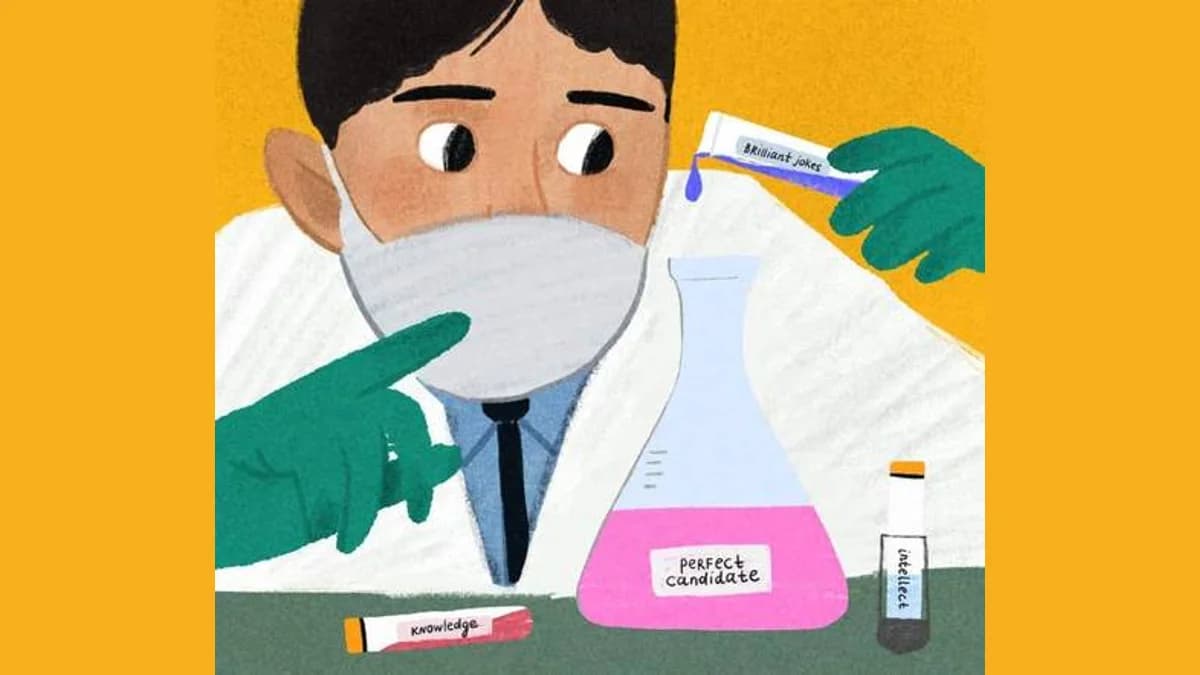
You are about to sit across from someone who will judge your character, your work ethic, and your fit for the role. These seven interview skills can help you get hired in 2026.
Your strong resume earned you the interview. That is a real win — now you need to close the deal.
Most people find interviews at least a little unnerving. You're meeting with someone who is judging you — your character, your work ethic, your past accomplishments, and your promise for the future. It feels worse when you face a panel of interviewers and are not sure where to look or who to address. Nerves can make you stumble over an answer, and that is uncomfortable for everyone involved. Interviewers understand that. At MakeResume, we have pulled together interviewing skills that will sharpen your performance and support your push toward your dream job in 2026.
What are interview skills, exactly? Largely the same qualities that make you a strong employee: clear communication, punctuality, confidence, organization, and enthusiasm for the work. A little sales ability does not hurt either!
Overview of skills for an interview
Start with the fundamentals. These are the interview skills worth focusing on, and how to project professionalism and expertise in your field.
- Interview preparation
- Know the company
- Speaking skills (clear, cohesive, calm)
- Think first, speak second
- Listening
- Show interest, not desperation
- Show gratitude
1. Interview preparation
A strong interview starts with deliberate preparation. Winging it rarely works, and interviewers can spot shallow prep from a mile away. So what should preparation include? We suggest re-reading the job description several times until you can discuss the position and its requirements comfortably. Then think through how your experience maps to the skills they want and where you can offer concrete examples.
Review your resume until you know it cold. It is what got you here, so a recruiter already saw something compelling in it. Just remember your interviewer may not have read every line or retained the details — use the conversation to refresh their memory and add context your resume could not fit. One practical tip: make sure what is on your resume matches what you say on the phone or on Zoom ( Skype, Google Meet, FaceTime, whatever). Inconsistencies raise red flags fast.
Eye contact is harder on video, but a few setup choices help. Before the call, position your camera so you face the screen directly and choose a background without concert posters or distracting photos behind you. If needed, blur the background — though keep in mind that blurring uses bandwidth and can affect call quality.
According to Forbes, career trends will move toward video interviews. That can stretch the hiring process longer than ever before: employers who have not met you in person may schedule three to eight interviews before making a decision.
Dress from head to toe in interview clothes, even for remote calls. You avoid the embarrassment of a hiring manager glimpsing pajama bottoms, and you put yourself in the right mindset.
Before an in-person meeting, you may need to pass a phone screening. Review these commonly asked phone interview questions to get past that stage. Then research typical interview questions in your field and draft thoughtful answers ahead of time.
You can also prepare by understanding the types of questions you may be asked.
- Soft skills interview questions or interpersonal skill interview questions: These questions focus on the attributes that make you a good listener or reliable employee. They include organization, communication (you can show off this skill during your interview), teamwork, punctuality. By the way, there's no (or only a rare) excuse for being late to a job interview.
- Communication skills interview questions: These will focus on the style you use to communicate. Be prepared with an anecdote or example of how you send and receive messages at work.
- Analytical skills interview questions: These questions aim to discover how you problem solve or make decisions in different situations. Once again, be prepared with an example.
2. Know the company
Being prepared also means learning about the organization you are interviewing with. You cannot answer " Why do you want to work here?" if you know nothing about the company. Get a feel for its philosophy and how it goes about business. How? If you know someone who works there, talk to them first. Otherwise, read the company website, browse LinkedIn for more context, and run a Google search for news articles or manager interviews. It is better to have too much information than too little.
Consider writing down points you want to mention, because physically writing helps you remember. Keep those notes nearby if nerves might get the better of you — but still treat the exchange as a conversation, not an open-book exam. Remember, your interviewer is a person, just like you ; )
Once you have done this groundwork, you will feel prepared — and that feeling usually means you are.
3. Speaking skills
An interview has a lot in common with an acting audition. Work on your speaking skills before you walk in. The process is tense, and under pressure many people talk too fast, mumble, or speak too softly. That is not what you want. Take a deep breath and practice mindful speaking — slowly, calmly, and clearly enough that every word lands. When you speak with control, your answers register more fully and your confidence comes through.
Structure helps, too. For behavioral questions, a brief setup, the action you took, and the result gives interviewers a complete picture without rambling. You do not need a rigid script, but having two or three stories rehearsed in that shape makes it easier to stay concise when nerves kick in.
Demonstrate communication and listening skills during the interview itself, and you may answer soft skills questions more easily — or avoid some of them entirely. On video, check your microphone and lighting beforehand so technical issues do not undermine an otherwise strong delivery.
Eye contact matters just as much. It connects you to your interviewers and signals confidence. If direct eye contact makes you nervous, look at the interviewer's eyebrow or chin — it still reads as engaged attention. Practice in a mirror or with a friend until it feels more natural.
4. Think first, speak second
It is fine to pause for a beat while you gather your thoughts. That brief silence gives you time to shape a clear answer and stay composed.
If public speaking does not come naturally — that is normal for most people — practice in front of a mirror. It may feel awkward at first, but it builds comfort over time. Give yourself grace and stay authentic (just a touch more polished).
Your body language helps, too. Lifting your spine and dropping your shoulders away from your ears projects confidence and makes breathing easier, which improves vocal projection. Strong delivery also shows your communication skills to hiring managers. If you communicate well under the stress of a job interview, that says a lot about how you will perform on the job.
5. Listening
There will be at least two people in the room — sometimes more. Showing that you listen well is essential. This is not just an interview skill; listening demonstrates thoughtfulness and your ability to work on a team. If you do not practice good listening skills, you may miss the point of a question and give a less-than-impressive answer. Stay in the moment, treat your interviewer with the respect they deserve, make eye contact, nod when appropriate, and confirm you understand before you respond.
Asking clarifying questions proves you were paying attention and helps you avoid the embarrassment of a misunderstanding. Active listening also means noticing what is not said. If an interviewer emphasizes collaboration or fast turnaround times, weave those priorities into your examples even when the question did not mention them directly. That kind of attentiveness reads as cultural fit, not flattery.
Try to think of the interview as a conversation. Employers may be trying to sell you on the company as much as you are trying to sell them on your fit. Listen for details you can reference in later answers, use them to ask strong follow-up questions, and decide whether this is the right position for you. You do not just want out of your current job and into any new job — you want the right job for you.
6. Show interest, not desperation
There is a clear line between genuine interest and visible desperation — and only the first one impresses. Your task is to show sincere enthusiasm for this specific role while proving you are well qualified for it. Approach every interview like it is for your dream job. That is hard when you urgently need work, but the best path to an offer is a great interview, not an appeal to your potential employer's sense of guilt.
Your interviewer wants to hire the best candidate, not the most desperate one. Present yourself as a highly qualified, professional candidate with the work experience that makes you a strong fit for the position. No matter how much you need the job, pleading or begging creates an uncomfortable and unprofessional situation. Stay cool, calm, and collected. Let your body language and eye contact carry your confidence. It pays off.
7. Show gratitude
End on a strong note.
When the interview wraps up, leave your interviewer thinking, "I'm putting that person at the top of my 'Hire Them!' list." Smile, say thank you, and reiterate your interest if it fits naturally. If another round is coming, you want to be first on the callback list. Interview skills matter — and so does your attitude.
Expert tip
Don't forget to send a thank you email after your interview.
An interview tip for the pandemic
If you do have an in-person meeting with a hiring manager, don't offer that firm handshake that once was a must. It may be your instinct, but safety comes first these days. And, of course, bring a professional-looking mask that matches your interview outfit.
You are not quite finished yet. Show appreciation that your interviewer invested time to get to know you and offer this opportunity. One interview skill worth mastering is the follow-up. After your interview, follow up with a thank-you email to reinforce your interest in the position. You do not need to write anything as extensive as a cover letter, but mentioning a high point of the interview is a good idea. That keeps you fresh in the hiring manager's mind and reminds them of your value.
Interview skills wrap up
Most of the skills for your interview are also skills you will need on the job. Remember, this conversation (or series of conversations) is an audition. Actors come to auditions prepared; you need to come to your interview prepared. Then, use excellent speaking and listening skills to project confidence and professionalism as you sell yourself as the best candidate for the position.
Best of luck in your job search in 2026!
Tools & guides mentioned in this article
- AI Resume Builder
Build an ATS-ready resume with AI writing help and live preview.
- Resume Templates
Browse ATS-friendly layouts for every industry and career stage.
- Free ATS Checker
Upload your resume and get an instant ATS compatibility score.
- Career Advice Blog
More resume, ATS, and job-search guides from MakeResume.
Land 3x more interviews with AI.
Don't let your resume get stuck in an ATS. Build an optimized resume in minutes, then validate it with our free checker.