
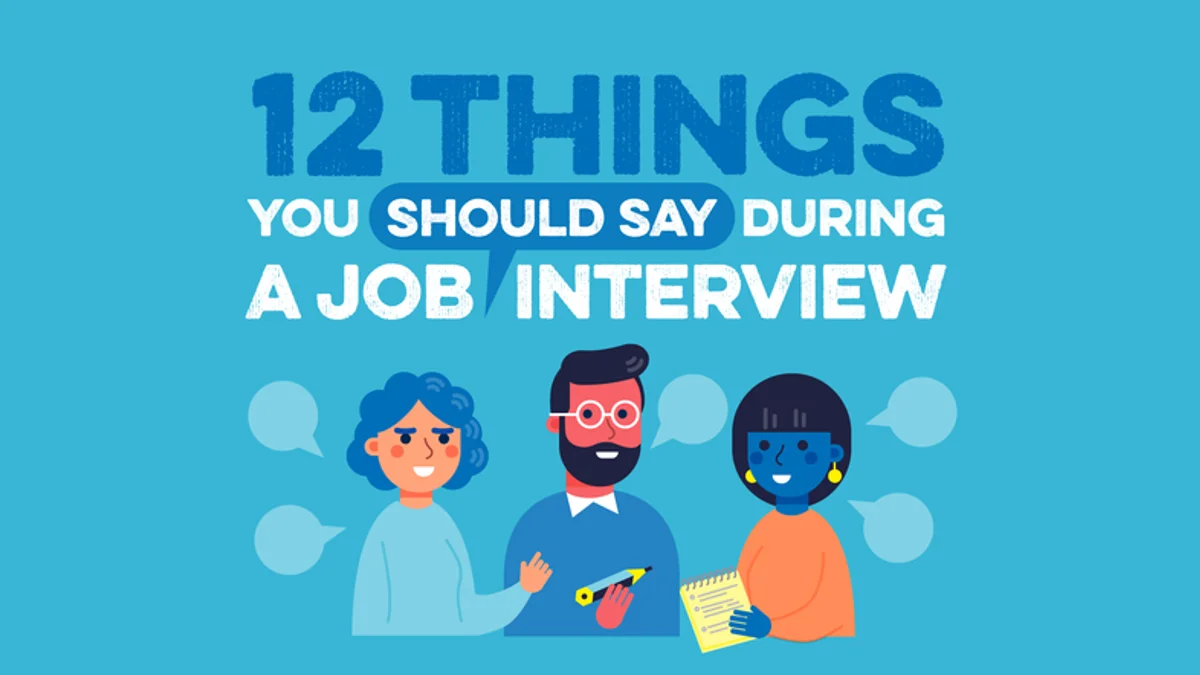
Knowing what to say in a job interview can be the difference between a polite goodbye and a callback. These 12 expert-backed phrases help you sound prepared, engaged, and genuinely right for the role — whether you are meeting in person, by phone, or on video.
You submitted a strong application and made the shortlist. That already tells you the employer sees potential in your background. What comes next is the part many candidates dread: the live interview where you have to speak for yourself, not just on paper.
Research and mental preparation will leave you better equipped to answer common job interview questions with confidence. Preparation alone is not enough, though. Interviewers often respond to a handful of phrases they were not explicitly waiting for — and sometimes do not realize they wanted to hear until you say them out loud.
Take the initiative. Show real enthusiasm. Stay focused on the role. Mirror language from the job description so your interviewers can see you understand what they need. Go one step further by explaining how your skills would benefit this specific company. Connecting your value to their priorities signals engagement and genuine interest. A line like "Here's how I can help your company…" is the professional way to say: "I am the right person for this job."
Gratitude matters, too. Business commentator Suzy Welch points to three qualities recruiters watch for: sincerity, courage, and humility. Find the nerve to tell your interviewers: " Thank you for this opportunity. I want this job." Then send a thank-you note afterward — that simple step puts you ahead of three-quarters of the competition.
We recently covered phrases you should never say in a job interview. Now that you know what not to say, here are 12 proactive lines to use at the final stage of your application — the things you definitely should say during a job interview.
Review them, adapt them to your voice, and walk into the room ready to show your potential employer you are the hire they need. The infographic below lays out all 12 at a glance, and the sections that follow explain when to use each one.
Before the interview: open with interest and credibility
A job interview is your best chance to sell yourself and stand out from other candidates. That starts with research and practice — and with a few phrases that signal you are prepared from the first minute. If the opening falls flat, you can lose ground before the conversation really begins.
- "I was so excited when I learned this position was open." This shows clear interest in the role and suggests you have been following the company and what it does.
- "I've worked in this field for…" Lead with relevant experience when you can. It establishes credibility early and tells the interviewer you understand what the work involves.
- "I really liked how your company [specific achievement]." A concrete example proves you did your homework and understand the organization's goals and how it operates.
During the interview: connect your skills to their needs
Everything you say during the main conversation will be weighed against other candidates. Stay focused, tie your answers to the role, and use language that shows you are listening as well as talking.
- "Here's how I can help your company." Frame your skills in terms of business benefit. Interviewers want to hear how you will contribute, not just what you have done elsewhere.
- "I have experience with [requirement from the job description]." Mirror the posting directly. Linking your background to listed requirements makes the fit obvious.
- "So, what you're saying is…" Paraphrasing shows active listening and gives you a chance to clarify anything you did not fully catch.
Ending the interview: leave a strong final impression
The closing minutes are when many candidates go quiet. Use them to confirm your interest and address any hesitation while you still have the interviewer's attention.
- "What are your thoughts on me as a candidate?" It takes confidence to ask, but it can surface concerns you can respond to on the spot rather than leaving them unresolved.
- "This job sounds perfect for me because…" Summarize why you fit based on what you learned in the conversation — not a generic pitch you prepared at home.
- "I want this job." It may feel obvious, but stating it clearly shows seriousness and direction. Pair it with the sincerity Suzy Welch describes above.
After the interview: follow up with purpose
Waiting for news is stressful, but a thoughtful follow-up keeps you visible and gives you one more chance to reinforce your case.
- "Thank you so much for taking the time to talk today." Good manners matter, and a thank-you note opens the door to share anything you forgot to mention live.
- "Something I wanted to mention is…" Use a follow-up email to add a point you did not get to — it shows you are still engaged with the opportunity.
- "Here's a link to my…" A portfolio, project, or work sample backs up what you claimed in the room with evidence they can review on their own time.
Preparation helps you feel comfortable in the interview. Research the company and role, practice these lines until they sound natural, and you will stand out from candidates who wing it. Good luck — start practicing now.

Resources
- Bortz, D. (2019). The best things you can say in a job interview. monster.com
- Petron, P. (2018). Why You Should Have a Personal Elevator Pitch (And How to Make One) linkedin.com
- Huhman, H. R. (2013). 8 Things to ALWAYS Say in an Interview. Businessinsider.com
- Ritschel, C. (2018). The four most important phrases to say in a job interview, according to career experts. Independent.co.uk
- Cahn, D. D. (1990). Perceived Understanding and Interpersonal Relationships. sagepub.com
- Kelley, T. (2018). Job Interviews: What to Say at the End?Jobsearchandinterviewcoach.com
- Ward, M. (2017). Suzy Welch: This is the one thing you should always say in a job interview. cnbc.com
- Half, R. (2017). A Little Thanks Goes a Long Way. roberthalf.com
- Renzulli, K. A. (2019). Yes, you really do have to send a thank-you note after a job interview—here's why. cnbc.com
Tools & guides mentioned in this article
- AI Resume Builder
Build an ATS-ready resume with AI writing help and live preview.
- Resume Templates
Browse ATS-friendly layouts for every industry and career stage.
- Free ATS Checker
Upload your resume and get an instant ATS compatibility score.
- Career Advice Blog
More resume, ATS, and job-search guides from MakeResume.
Land 3x more interviews with AI.
Don't let your resume get stuck in an ATS. Build an optimized resume in minutes, then validate it with our free checker.