

Flexible schedules, four-day work weeks, and hybrid policies have reshaped what Americans expect from a job — but location still matters. Some cities combine strong career markets with cultures where employees report genuinely high satisfaction.
We surveyed 3,000 workers nationwide to map where job happiness runs highest. The analysis ranks 100 U.S. cities and surfaces the workplace factors — management quality, flexibility, benefits, and stress levels — that separate thriving metros from struggling ones.
Below are the key findings from that research, what they mean for workers evaluating a move or a new role, and how happiness patterns connect to broader trends in remote work, benefits, and workplace stress.
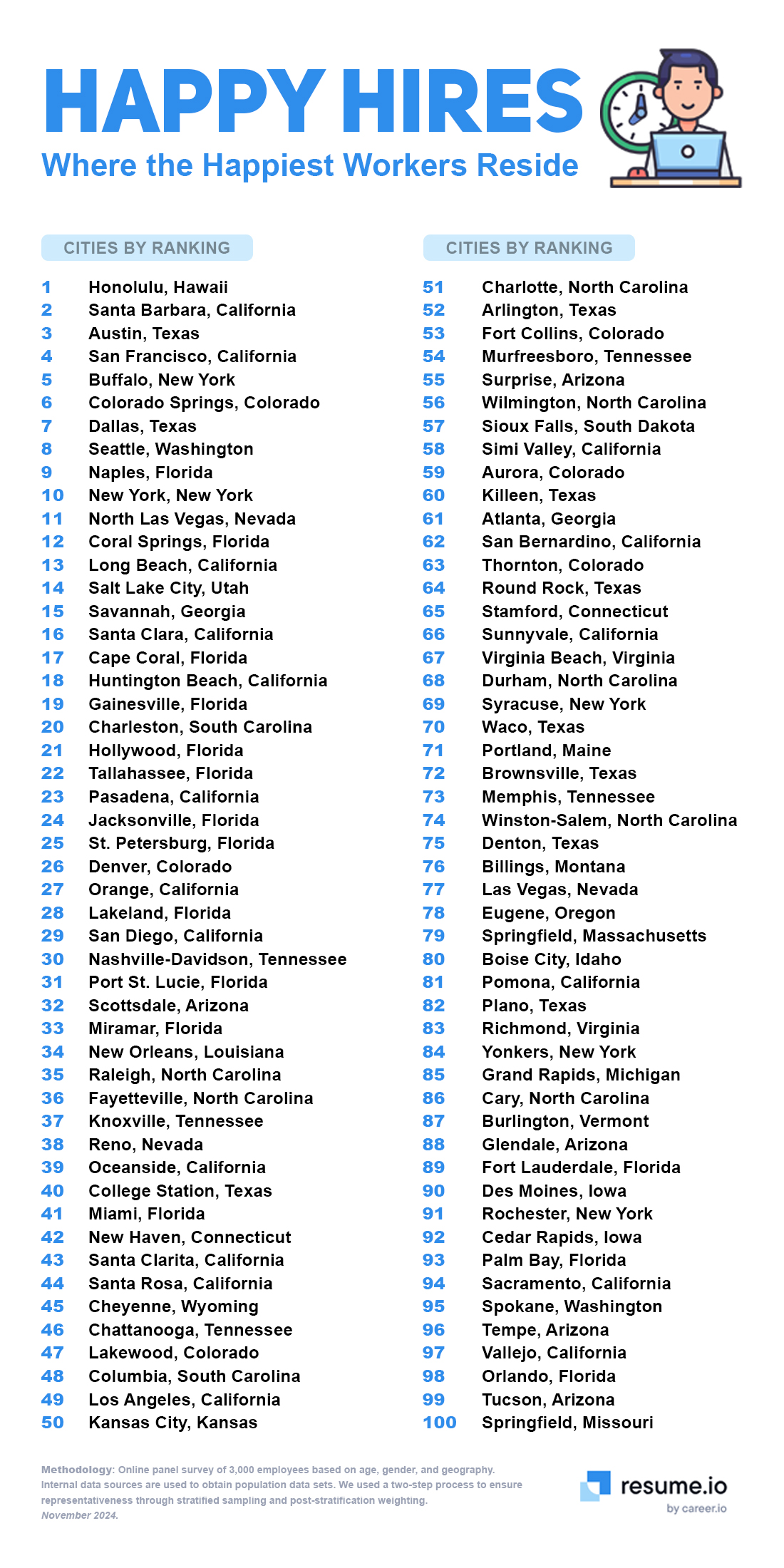
What did the happiest-workers survey find?
Why do supportive work cultures drive happiness in top cities?
Leading metros for workplace happiness — including Honolulu, Austin, and San Francisco — pair strong career opportunities with inclusive, supportive office cultures. Employees in these markets report that management, team dynamics, and growth paths matter as much as salary when they rate overall satisfaction.
The pattern suggests happiness is not accidental: cities where employers invest in culture and professional development tend to rank consistently higher in worker well-being.
Can you be happy at work in any type of city?
Yes — the happiest cities span high-energy metros like New York and relaxed coastal towns like Naples, Florida. There is no single lifestyle template for job satisfaction.
What the rankings share is not geography but fundamentals: supportive management, reasonable job security, and policies that respect personal time. Workers who prioritize those factors can evaluate any market more objectively than hype alone.
Is the workplace shifting toward worker-centered policies?
Survey responses point to a clear evolution toward employee-first policies. Job security remains relatively strong in many sectors, and flexible arrangements — from hybrid schedules to compressed work weeks — are no longer fringe benefits at top-ranked employers.
That shift correlates with higher reported fulfillment, especially among workers who previously felt locked into rigid in-office models.
Does remote work actually make employees happier?
For a substantial share of respondents, remote work is more than a convenience — it is a core source of satisfaction. Workers cite more family time, fewer commutes, and space for personal growth as direct happiness gains.
Remote-capable roles also appear more often in higher-ranked cities, suggesting labor markets that embrace flexibility attract and retain happier talent.
How much does a great manager matter?
A supportive boss has an outsized impact. More than a quarter of workers in the sample name a great manager as their top source of job satisfaction — ahead of perks, title, or even pay in some cohorts.
Empathetic, clear leadership shows up repeatedly in cities at the top of the happiness index, reinforcing that culture starts with management behavior, not slogans.
Do workers prefer hybrid work over fully remote or fully in-office?
Hybrid arrangements remain the most popular setup in the data. Employees value the option to collaborate in person when it helps, without giving up the flexibility of working from home on other days.
That balance helps many workers feel both connected and autonomous — a combination that pure remote or full RTO models struggle to match for the median respondent.
What still gets in the way of workplace happiness?
Flexibility alone does not eliminate stress. High workloads and unrealistic expectations remain major drag factors, even in cities that rank well overall. Our separate workplace anxiety study found similar patterns: deadline pressure and burnout fears cut across markets.
Employers that expand flexibility without addressing workload risk trading one frustration for another — and happiness scores eventually reflect that.
Are four-day weeks and better benefits moving the needle?
Yes. Adoption of four-day schedules and expanded benefits packages correlates with higher satisfaction in several top-ranked regions. Workers report more time for family, hobbies, and recovery — and higher loyalty when employers treat those outcomes as legitimate goals, not perks to earn.
If you are comparing offers, benefits and schedule design deserve the same scrutiny as base pay. Our employee perks study breaks down which benefits U.S. workers rank highest in 2025.
How was the happiest-workers study conducted?
Online survey of 3,000 employed adults across the United States, conducted in 2024. Respondents rated job satisfaction, workplace culture, flexibility, and related factors; results were aggregated to rank 100 cities. Sampling aimed to reflect a mix of regions, industries, and tenure levels.
Frequently asked questions
Which U.S. cities have the happiest workers?
The full ranking covers 100 cities; top performers in our sample include Honolulu, Austin, San Francisco, and a mix of other metros and smaller cities. See the infographic above for the complete ordered list and regional breakdown.
Should I move cities for a happier job?
Location can help, but culture and manager quality matter more than city hype alone. Use rankings as one input — then validate fit through interviews, employee reviews, and questions about flexibility, workload, and benefits before relocating.
How do I find employers with strong cultures in any city?
Research benefits and flexibility policies, read recent employee reviews, and ask specific culture questions in interviews. A targeted resume and clear story about what you need from a workplace make it easier to attract employers that match — use our AI resume builder to position that narrative quickly.
Tools & guides mentioned in this article
- AI Resume Builder
Build an ATS-ready resume with AI writing help and live preview.
- Resume Templates
Browse ATS-friendly layouts for every industry and career stage.
- Free ATS Checker
Upload your resume and get an instant ATS compatibility score.
- Free Resume Checker
Grade your resume's overall quality, bullet impact, and clarity for free.
- Career Advice Blog
More resume, ATS, and job-search guides from MakeResume.
Land 3x more interviews with AI.
Don't let your resume get stuck in an ATS. Build an optimized resume in minutes, then validate it with our free checker.