

Remote workers in New York City save the most commuting time on average: 331.67 hours per year. MakeResume used U.S. Census Bureau data to find where working from home returns the most travel time, city by city and state by state.
In 2019, just before the pandemic, the average U.S. commute hit a record 27.6 minutes one way — nearly 22 extra hours a year on the road compared with 2006. Only 5.7% of workers typically worked from home. Then lockdown made remote work the default, and after lockdown it became an expectation many people still want to keep.
By spring 2022, some 58% of Americans said they could work from home at least part of the time, and 35% could spend the whole week out of the office. Nearly nine out of ten said yes when flexible work was offered. That option is not even: men were 9% more likely than women to be offered a chance to skip the commute, and younger workers got more opportunities than older ones. Commute length also varies wildly by city and state. Below: the places where staying home saves the most hours, and how we counted them. If you are putting flexibility on a resume, these numbers are useful context — not a lecture for your manager.
What did we measure?
We took average one-way commute times from the U.S. Census Bureau, doubled them for a round trip, multiplied by 250 working days, then multiplied again by the number of remote workers in each city and state.
That produces two figures. The first is hours saved by a typical worker who no longer commutes. The second is the total hours saved by everyone already working remotely in that place. The method is simple on purpose: it does not model hybrid schedules, transit vs. driving, or whether a long commute is also a stressful one. It answers a narrower question: if you live here and you work from home, how much travel time does that skip?
The WFH shift still does not feel the same in every zip code. Discrimination is not what sets commute length, but density, transit, and housing prices are. That is why the same job can cost you a fortnight of extra hours in one metro and barely two days in another. The rankings below show where the clock is most expensive.
What are the key findings on commuting time saved?
New York City leads both per-worker hours and citywide totals. California leads among states on total hours. South Dakota sits at the bottom of the average-hours list.
- Remote workers in New York City save the most commuting time on average: 331.67 hours per year.
- Altogether, New York City's remote workforce saves 295,632,078 commuting hours yearly — more than any other city.
- California is the state that is cutting the most commuting hours altogether: 876,776,100 per year.
- The average remote worker in South Dakota saves just 145 hours per year by working at home — the lowest average for any city or state.
Do New Yorkers gain two weeks a year by working from home?
Yes. The average New York City worker could save 331.67 hours a year by staying home — about a fortnight of full days and nights, and two whole days more on the road than workers in any other city we ranked.
We found 11 big cities where workers spend more than ten full days a year commuting. Five of those cities are in California, and two are in New Jersey. New Yorkers still sit at the extreme: the next-longest metros do not catch NYC's average.
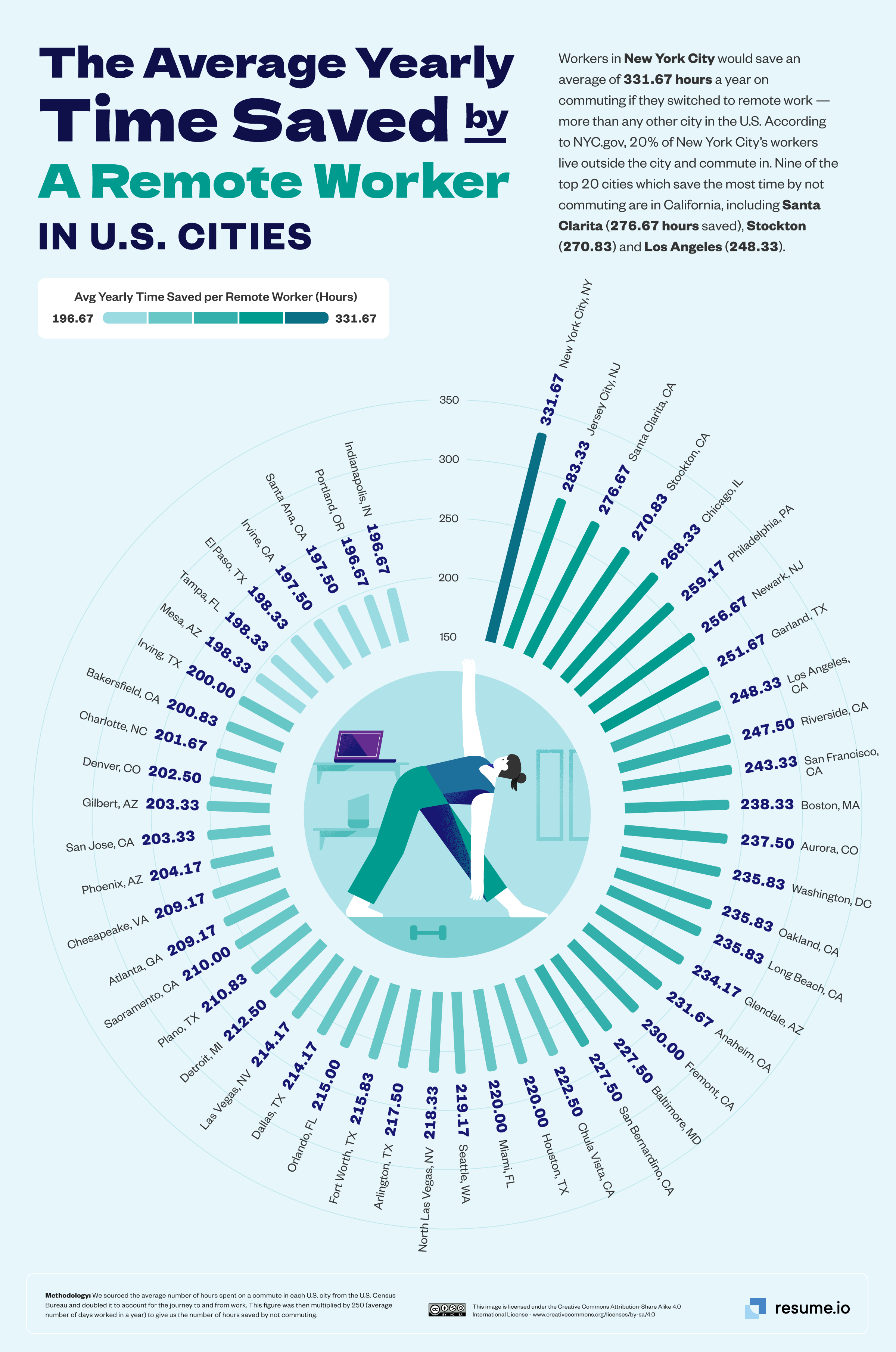
A long ride into the office also has a price tag. “The young advertising copywriter comfortably situated at his stand-up desk in his East Village apartment is being asked to come back uptown for the romance of an $18 salad at Sweetgreen,” writes Ginia Bellafante in the New York Times — the same tension we cover in the office-return debate. As of April 2022, 49% of New Yorkers planned to work remotely more often, likely saving around half the average $12,561 they usually spend working in the city, according to Stanford economics professor Nicholas Bloom.
The chart above is potential: hours a typical commuter could reclaim. To see what is already happening, we multiplied average commute time by the number of remote workers in each city.
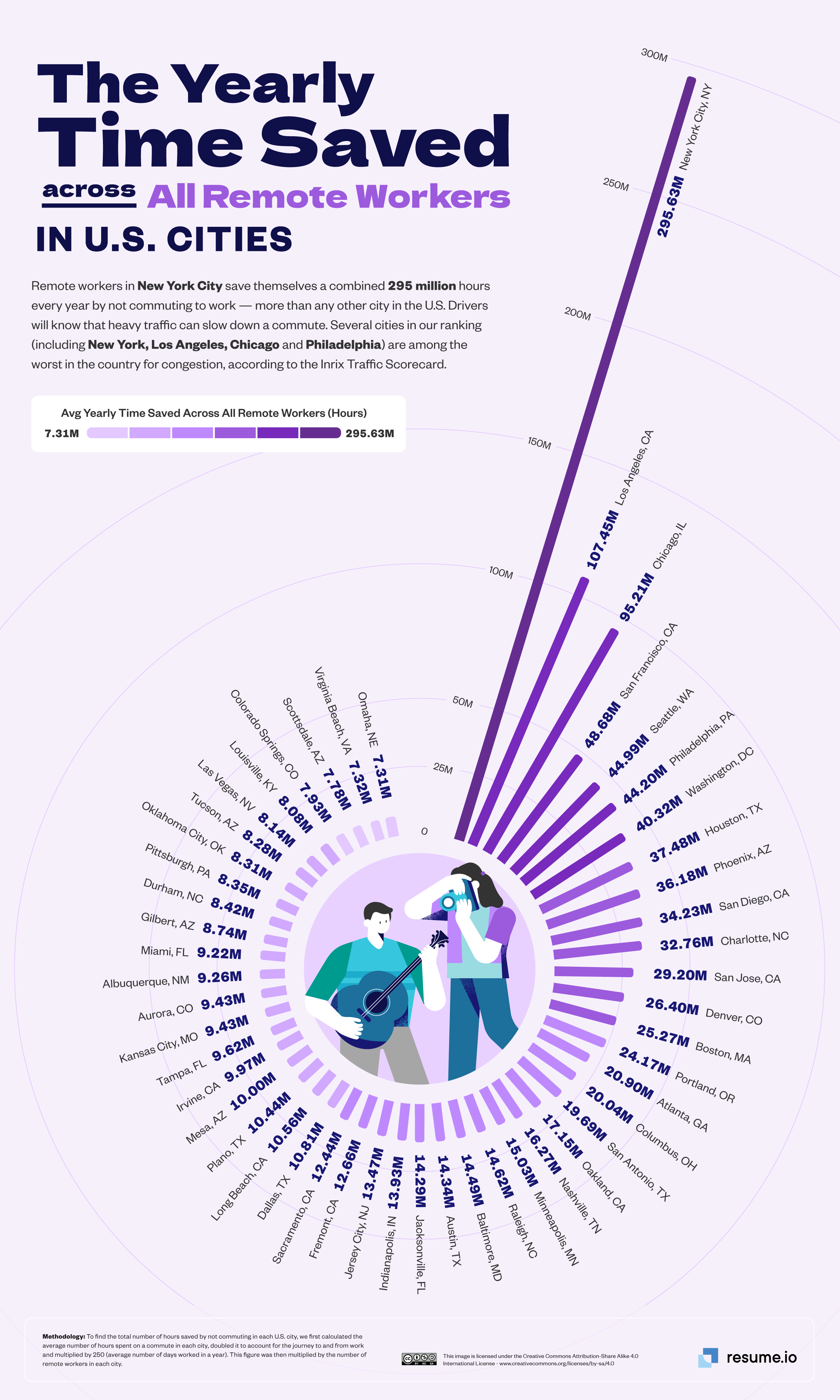
New York City is also among the most stressful places to commute. That helps explain why its workforce now collectively saves 295.63 million hours a year by working from home — 2.75 times more than any other city, and more hours than the lowest 17 states combined. Remote work still helps the person who skips the train. Employers and urban policymakers have a quieter downtown to figure out. If you are heading back part-time, return-to-office etiquette is a smaller problem than the hours you give up in traffic.
Are Californians saving nearly a billion hours a year at a home office?
Yes, on the statewide total: California's remote workforce saves 876,776,100 commuting hours a year. Per worker, New York, Maryland, and New Jersey still reclaim more time than California does.
Commuting is not only a calendar problem. One study linked a round-trip of just 20 miles to higher blood pressure, which can lead to heart disease and stroke. Another found that a regular long commute makes you less likely to socialize in the rest of your life. People who live in suburbs or farther out also sit in harmful air on those days they drive. Workers in New York state and its neighbors Maryland and New Jersey can save the most time on average by staying home when they can.
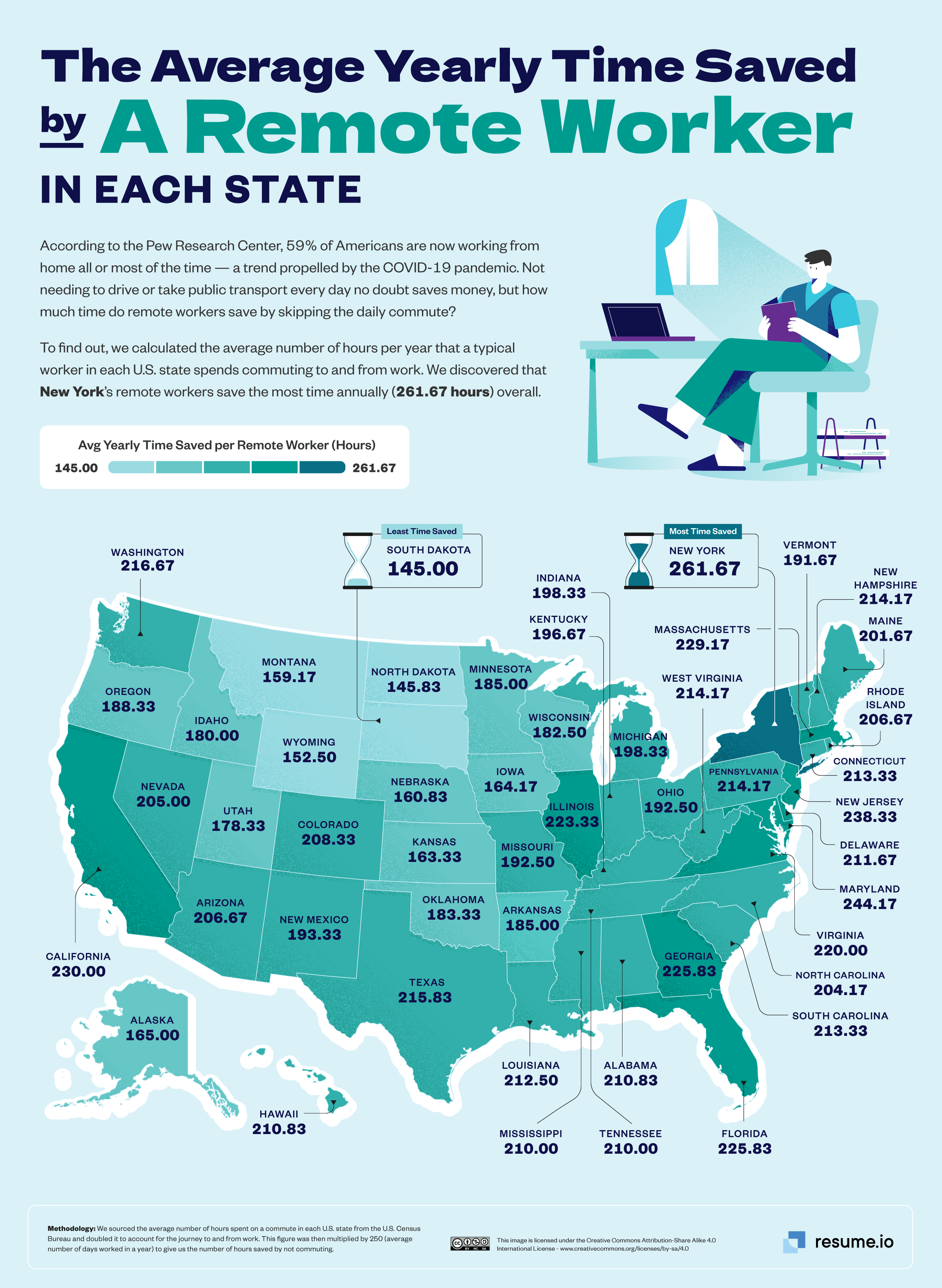
Midwest and central-western states sit toward the bottom of that per-person list. The average annual commute in both South Dakota and North Dakota is around 145 hours. Those are among the states with the lowest population density in the U.S., which can make the trip itself smoother even when the miles add up.
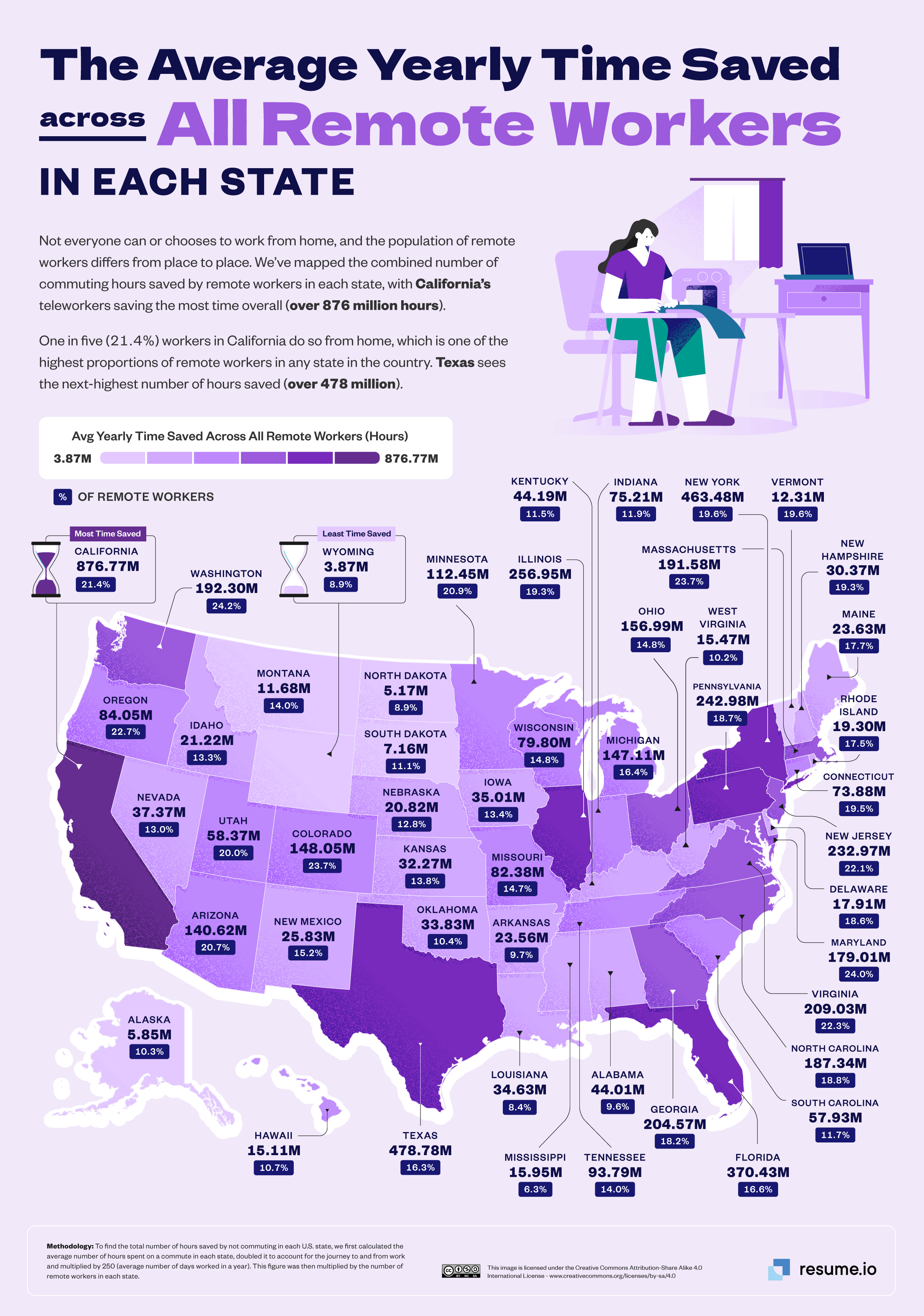
Population still wins the statewide race. California comes out on top with 876.77 million worker hours saved each year — ahead of Texas and New York because of a large population, a long average commute, and a relatively high share (22.1%) of remote workers. Only seven states count a higher remote-worker share, led by Washington at 24.2%.
What is a virtual commute?
A virtual commute is a short, chosen ritual that separates home from work when you never leave the house — a walk around the block, ten minutes in a quiet room, or anything else that replaces the old train ride.
Some people miss not only on-site working but the commute itself. One HBR column argues that the commute is good for you: it adds structure, a break between “work and home identities,” and something to complain about with colleagues. None of that requires a 90-minute slog. You can pick a shorter commute — or feel better about remote days — by looking at the city and state tables above.
HBR's practical version is to schedule “some solo time meditating in an unoccupied room or taking a short walk around your block before hopping into your first meeting.” They call that a virtual commute. The useful part is that you choose how long it takes. If you are job hunting, treat location and hybrid days as a benefit you can negotiate the same way you would salary — after they already want you.
How was the commuting-time data calculated?
We started with the top 100 U.S. cities by population using 2021 annual estimates from the United States Census Bureau. From the same source, we collected average commute time and the total number of remote workers in every U.S. state and those top 100 cities.
We doubled the average commute (to and from work), then multiplied by 250 — the average number of days worked in a year — to get yearly hours a typical worker spends commuting, and therefore hours saved by not commuting.
Total hours saved by all remote workers in each location is that individual figure times the local remote-worker count. Data was collected in December 2022.
This is a snapshot of Census commute times and remote headcount, not a forecast of hybrid policy. Office rules have shifted since then; the hours on the table still matter if you are choosing where to live, whether to apply to an on-site posting, or how to talk about flexibility in a cover letter.
Frequently asked questions
Which U.S. city saves the most commuting time by working from home?
New York City. The average remote worker there saves 331.67 hours a year. Across the whole remote workforce, NYC saves 295,632,078 hours yearly — 2.75 times more than any other city in this ranking.
Which state saves the most commuting hours overall?
California, at 876,776,100 hours per year. That reflects population, a long average commute, and 22.1% remote workers. Washington has a higher remote share (24.2%) but a smaller statewide total.
Where do remote workers save the least time?
South Dakota has the lowest average: about 145 hours a year, similar to North Dakota. Lower population density can make the remaining commute less of a grind even when you still drive.
How did you calculate hours saved?
Census average one-way commute × 2 × 250 workdays, then (for totals) × number of remote workers. Top 100 cities by 2021 population, plus every state. Collected December 2022.
Does skipping the commute actually help health?
Long commutes are linked to worse health in the studies we cite: a 20-mile round trip with higher blood pressure, less socializing, and more time in polluted air. Hours saved are not a medical treatment, but they are time you can spend on sleep, movement, or family instead of traffic.
Tools & guides mentioned in this article
- AI Resume Builder
Build an ATS-ready resume with AI writing help and live preview.
- Resume Templates
Browse ATS-friendly layouts for every industry and career stage.
- Free ATS Checker
Upload your resume and get an instant ATS compatibility score.
- Free Resume Checker
Grade your resume's overall quality, bullet impact, and clarity for free.
- Career Advice Blog
More resume, ATS, and job-search guides from MakeResume.
Land 3x more interviews with AI.
Don't let your resume get stuck in an ATS. Build an optimized resume in minutes, then validate it with our free checker.