
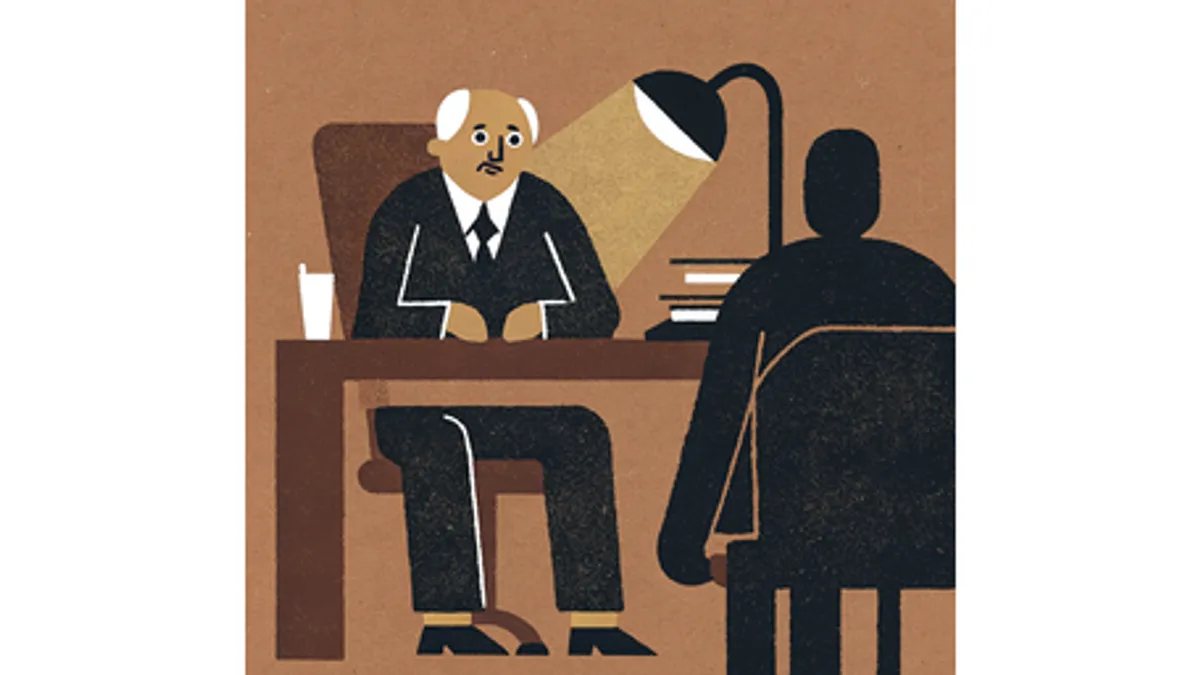
Micromanaging is a management style where a manager controls and monitors an employee's work far more closely than the task actually needs. Instead of setting a goal and trusting the person to reach it, a micromanager dictates how the work gets done, reviews every detail, and asks for constant updates. It usually comes from anxiety rather than bad intent — but it wears people down all the same.
What does micromanaging mean in a workplace context?
In a workplace context, micromanaging means a manager stays involved in the small details of someone's work to a degree that leaves them little room to use their own judgment. The manager assigns a task, then controls how every step is carried out, reviews minor decisions, and requires frequent check-ins rather than trusting the person to deliver.
The word itself points to the problem. To manage is to guide toward an outcome. To micromanage is to shrink that focus down to the smallest unit of work, so the manager ends up supervising keystrokes instead of steering direction. A healthy manager cares where the work is going; a micromanager cares exactly how each inch of it gets produced.
This distinction matters because micromanaging isn't the same as being involved or attentive — plenty of good managers stay close to their teams. What separates the two is trust and proportion:
- Attention becomes micromanagement when the oversight is heavier than the task or the person's experience warrants.
- Involvement becomes micromanagement when someone can't make a routine decision without approval.
- Feedback becomes micromanagement when it targets personal style and preference rather than results.
Getting this right matters because the label gets thrown around loosely. Being asked for a weekly update is normal. Being asked for three updates a day on a task you were hired to own is not.
What does micromanaging look like?
Micromanaging looks like a manager who can't let go of the details. The clearest markers are reluctance to delegate, a demand to be copied on everything, frequent progress checks, and a focus on how a task was done rather than whether it was done well. Any one of these can be normal — the pattern, repeated across everyday work, is what defines it.
- Reluctance to delegate. The manager holds on to tasks, or takes them back to redo, believing no one else will do them correctly.
- Excessive check-ins. They request updates far more often than the work requires, sometimes several times a day.
- CC on everything. They insist on being copied on routine emails so they can monitor every exchange.
- Approval bottlenecks. Small, everyday decisions stall because they must be signed off first.
- Process over outcome. They care more about the exact method than the finished result, even when the result is strong.
- Rewriting finished work. They revise completed work to match personal preference rather than any real standard.
The emotional signature is just as telling as the behavioral one. If you find yourself writing longer status updates than the work itself took, or hesitating over a decision you were hired to make, that's often the first sign. The feeling of being watched tends to arrive before you can name the behavior causing it. For a fuller breakdown of the subtler patterns, see our guide to the signs of a micromanaging boss.
What are some examples of micromanaging?
Examples of micromanaging usually involve a manager inserting themselves into work an employee could handle alone: demanding to approve every email before it's sent, rewriting a report to match personal wording preferences, requiring hourly updates on a routine task, or redoing delegated work because it wasn't done exactly their way.
The table below shows the same situation under normal management versus micromanagement. The difference is rarely the action itself — it's the degree, and the loss of trust behind it.
| Situation | Normal management | Micromanaging |
|---|---|---|
| A report is due | Agrees the deadline and reviews the final draft | Asks for the draft in stages and rewrites the wording |
| Team communication | Asks to be looped in on key decisions | Requires a CC on every routine email |
| A new project starts | Sets the goal and checks in at milestones | Dictates each step and checks progress hourly |
| An employee makes a choice | Trusts routine decisions, advises on big ones | Requires approval before any decision is made |
| Reviewing finished work | Gives feedback tied to the result | Redoes the work to match personal preference |
Notice that none of the micromanaging behaviors are strange or dramatic on their own. Asking for an update, reviewing a draft, being copied on an email — all ordinary. What tips them over is frequency and rigidity: the same reasonable action, demanded so often that it leaves no room to actually work.
Why do managers micromanage?
Managers micromanage mostly out of anxiety, not malice. The behavior tends to come from fear of failure, a lack of trust in the team, perfectionism, or the difficulty of moving from doing the work to leading the people who do it. Most micromanagers genuinely believe they're protecting quality, even as the control undermines the results they want.
Two causes explain a lot of it. The first is a manager's pull toward the ground-level work they used to do — especially soon after a promotion moves them away from familiar tasks they were good at. The second is the discomfort of handing that work over and watching someone else do it differently. Both are understandable, and both push a manager toward gripping too tightly.
- Fear of failure. They worry any mistake reflects on them, so they try to control every input.
- Lack of trust. They haven't yet built confidence in the team's skills, so they supervise instead of delegate.
- Perfectionism. They hold a narrow view of the "right" way and struggle to accept alternatives that work just as well.
- Inexperience. New managers often over-control, because leading through others is a genuinely different skill from doing the work yourself.
Seeing these causes clearly is useful if you're on the receiving end, because it reframes the behavior. Micromanaging usually says more about the manager's internal pressure than about your performance. That doesn't make it acceptable — but it does make it less personal, which is often the first step toward addressing it calmly.
What is the difference between micromanaging and good management?
The difference is trust. Good management sets clear goals and gives people the autonomy to reach them, stepping in with support when needed. Micromanaging removes that autonomy and controls how every task is done. One builds capability and confidence over time; the other quietly erodes both.
Good managers and micromanagers often start from the same place — they care about quality and want the work to go well. The split is in how they pursue it. A strong manager treats oversight as a way to support people toward a result. A micromanager treats oversight as a way to keep control of the process.
| Dimension | Good management | Micromanaging |
|---|---|---|
| Focus | The outcome and the goal | The method and the details |
| Decisions | Delegated with clear boundaries | Held centrally, requiring approval |
| Check-ins | Agreed in advance, at milestones | Frequent, unplanned, and reactive |
| Feedback | Tied to results and growth | Tied to personal preference |
| Effect on the team | Confidence and independence grow | Confidence and initiative shrink |
One test cuts through all of it: ask what happens when the manager isn't in the room. Under good management, work continues, because people know the goal and trust their own judgment. Under micromanagement, work stalls, because no one is sure they're allowed to proceed. Close attention to quality isn't the problem — control replacing someone's judgment instead of developing it is.
How does micromanaging affect employees and teams?
Micromanaging damages morale, motivation, and eventually performance. Constant supervision signals a lack of trust, which lowers confidence and discourages initiative. Over time it drives stress and turnover — and it often produces worse results than a lighter touch would, because people stop thinking independently and wait to be told.
The effect compounds because a manager's influence on how a team feels is enormous. Gallup's analysis of 2.7 million employees across 100,000 teams found that managers account for at least 70% of the variance in team engagement (Gallup, State of the American Manager). When that outsized influence gets spent on surveillance rather than support, the cost is significant.
The damage tends to show up in a predictable sequence:
- Confidence drops. Being watched and corrected constantly makes people doubt judgment they were once sure of.
- Initiative fades. Employees stop suggesting ideas or making calls, because independent action keeps getting overridden.
- Stress rises. The pressure of proving yourself repeatedly creates anxiety that follows people home.
- People leave. Talented employees with options move toward workplaces that offer more autonomy.
There's a quieter cost too, one that catches many micromanagers by surprise. By absorbing so much of the team's work and decisions, they overload themselves and lose the time their role actually requires for strategic thinking. The control meant to protect quality ends up limiting the whole team — manager included.
Common questions about micromanaging
Micromanaging sits close to some serious workplace issues, so it raises fair questions about where the line falls.
Is micromanaging bad?
Generally yes, for both people and results — though the intent behind it is often good. It lowers morale, reduces confidence, and slows work by removing the autonomy people need to perform. In narrow cases very close oversight helps, such as training a brand-new employee or working in a high-risk setting where precision is critical. As an ongoing default, it costs more than it protects.
Is micromanaging bullying?
Not automatically, but it can cross into it. Ordinary micromanagement comes from a manager's anxiety and applies to how work gets done. It becomes bullying when the behavior is targeted at a specific person, repeated, and intended to intimidate, humiliate, or undermine them. The distinguishing factors are intent and whether one individual is singled out for treatment others don't receive.
Is micromanaging harassment?
Usually not in the legal sense. Harassment generally requires the behavior to be tied to a protected characteristic such as race, sex, age, religion, or disability. Excessive oversight applied to everyone — or applied because a manager can't let go of control — doesn't meet that bar. It may become harassment if it's directed at someone specifically because of a protected characteristic. This is general information, not legal advice; if you think you're facing unlawful treatment, talk to an employment lawyer or your local labor authority.
Is micromanaging illegal?
Micromanaging isn't illegal on its own — there's no law against a manager being overly controlling or difficult to work for. It can contribute to a legal claim only when it becomes part of unlawful conduct, such as discrimination against a protected group or retaliation for a protected action like reporting misconduct. On its own, micromanagement is a management problem, not a legal one.
More frequently asked questions
What is the opposite of micromanaging?
The opposite is often called macromanagement — a hands-off style where a manager sets clear goals and lets employees decide how to reach them. It relies on trust and autonomy, with the manager offering support and stepping in only when needed. The aim is to guide the outcome while leaving the method to the person doing the work.
Can micromanaging ever be a good thing?
Sometimes, but only in specific and temporary situations. Close oversight helps when training a new employee, onboarding someone into an unfamiliar process, or working somewhere small errors carry serious consequences. The key is that it should fade as competence and trust grow. As a permanent default, it does more harm than good.
How do I know if I'm being micromanaged or just well managed?
Ask what happens to your independence. If your manager sets goals, trusts your decisions, and checks in at agreed points, that's good management. If you can't make routine choices without approval, are asked for constant updates, and see finished work redone to match preference, that points to micromanagement. The difference is how much judgment you're allowed to use.
👉 Ready to work somewhere you're trusted? The MakeResume AI builder helps you show what you've actually delivered, not just what you were told to do.
Tools & guides mentioned in this article
- AI Resume Builder
Build an ATS-ready resume with AI writing help and live preview.
- Resume Templates
Browse ATS-friendly layouts for every industry and career stage.
- Free ATS Checker
Upload your resume and get an instant ATS compatibility score.
- Career Advice Blog
More resume, ATS, and job-search guides from MakeResume.
Land 3x more interviews with AI.
Don't let your resume get stuck in an ATS. Build an optimized resume in minutes, then validate it with our free checker.