

Cover letter statistics tell a consistent story: hiring managers still read them, still weigh them in decisions, and still reject applications when letters are missing, generic, or sloppy. Below are 50+ data points on what recruiters expect, how cover letters affect interview rates, and where most applicants fall short.
Do you need a cover letter in 2025? Are they outdated? Can a well-written letter actually move you ahead of equally qualified candidates? These are fair questions — and the cover letter hiring manager stats below provide concrete answers rather than career-advice opinions.
Whether you are deciding whether to write one, refining your approach, or curious about how AI and ATS software are changing the process, this data-backed foundation will sharpen your job search strategy. Pair it with our guides on what a cover letter is and how long it should be to turn the numbers into action.
Cover letter statistics you should know
Cover letter statistics confirm what experienced job seekers already suspect: in a competitive market, a strong letter can be the difference between landing an interview and getting passed over.
When written well, a cover letter showcases your personality, connects your experience to the role, and shows an employer why you are the best candidate for the job. The numbered findings below — sourced from recruiter surveys, hiring-manager polls, and job-search research — explain why your cover letter deserves the same care as your resume.
Should you send a cover letter?
The data on whether you need a cover letter is unambiguous: most successful applicants send one, and most hiring managers still read them.
1. Among recent new hires, 35.4% consistently submitted cover letters with every application, while 42.5% wrote cover letters for some, but not all. (Jobscan)
2. According to the same survey, only 6.1% of applicants never wrote a cover letter for a single application. (Jobscan)
3. Among those who never submitted a cover letter, only 21.2% received job offers. On the other end of the spectrum, 35.8% of candidates who always wrote cover letters got hired. (Jobscan)
4. In one poll of 450 hiring managers, 24% said they read every cover letter, while 35% read at least some cover letters. (Josh Bob, career coach)
5. Executives who review applications pay close attention to cover letters. About 90% say that cover letters are invaluable for evaluating candidates and deciding who to interview. (Top Resume)
6. Another survey of over 10,000 recruiters found that nearly one-third (31%) take cover letters into consideration when making hiring decisions. (Tracy Saunders, BossMakeHer)
7. Some employers make submitting a cover letter optional. In those cases, it is a good idea to include one anyway, since about 79% of employers say they read them even if they do not require one. (Jobera)
8. About half (49%) of hiring managers say that attaching a cover letter to your resume can improve your job chances. (TeamStage)
9. Even if it is listed as optional, 72% of recruiters expect to receive cover letters. (Arcadia University)
10. Think a cover letter does not matter that much? Think again. Up to 81% of hiring managers have rejected applicants after reading their cover letters. (Zety)
11. Nearly half (45%) of hiring managers say that not including a cover letter could lead them to automatically reject an application. (Zippia)
12. Smaller companies may be more likely to review cover letters, according to one survey. Among technology companies, 65% of start-ups required cover letters, compared to 55% of medium-sized companies and 48% of giant tech corporations. (Ladders)
Cover letter content statistics
Sending a cover letter is only half the equation — these cover letter hiring manager stats reveal what employers actually look for when they read one.
13. A cover letter should fit on one page and be no longer than 400 words. Keep it short and sweet—no fluff necessary. (cover letter research, 2025)
14. Many employers (70%) prefer cover letters that are one-half page or less. (Zippia)
15. Employers want to hire enthusiastic candidates, and 47% would not offer a job to someone who does not know anything about the company. Show that you have done your homework by incorporating specific details about the company into a cover letter. (Twin Employment and Training)
16. Besides company knowledge, your cover letter should offer examples of how you have used your skills and abilities to achieve positive outcomes in past jobs. 36% of employers look for candidates who show evidence of multitasking skills, while 31% look for applicants with initiative. (Twin Employment and Training)
17. Other research shows that 35% of hiring managers disregard cover letters that don't mention candidates' skills. (TeamStage)
18. Another big reason some employers automatically reject applicants? Typos. Around 58% of employers toss cover letters with obvious mistakes. (TeamStage)
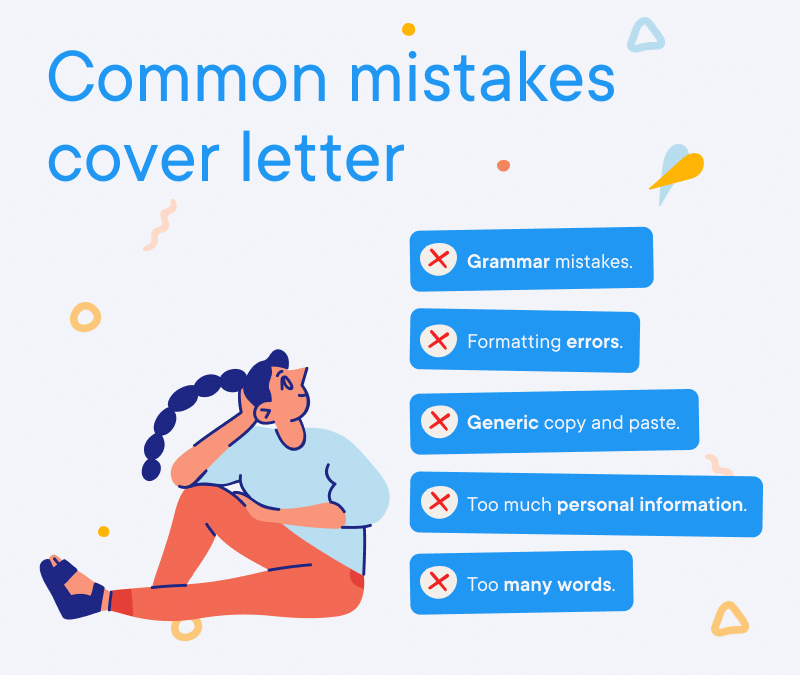
19. Your cover letter should explain why you want the job. In one survey of human resources (HR) professionals, 63% say they want to learn about candidates' motivations for applying. (Arcadia University)
20. Other recruiters (27%) say that their top expectation for a cover letter is connecting a candidate's work experience to the job's duties and demands. (Zety)
21. Referrals matter, so mention them in a cover letter if you have this mutual connection. When reading cover letters, 19% of employers specifically look for referrals. (Zety)
22. Including a referral in your cover letter can significantly boost your chances. According to one study, one in six candidates (17%) who are referred to a role get hired, compared to only 7% of traditional, non-referred applicants. (ERIN)
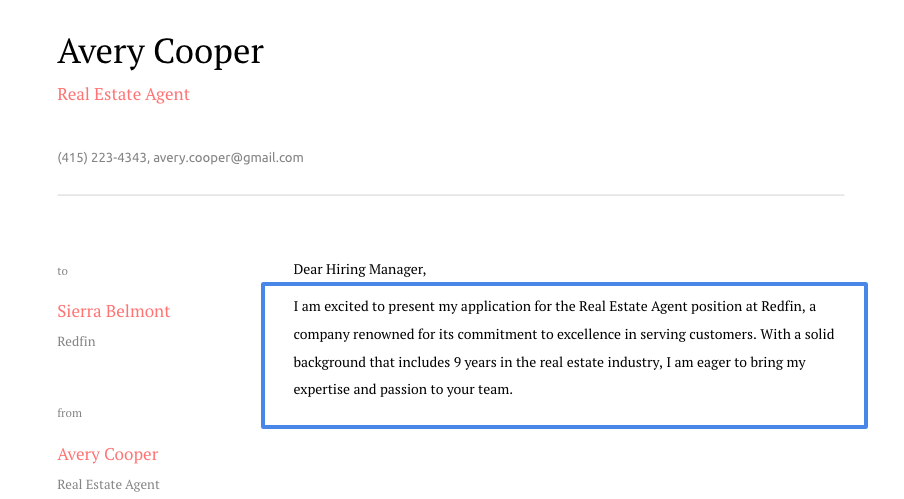
23. Your introduction needs to make an impact immediately. For 41% of hiring managers, the introduction is the most important part of a cover letter. (Jobera)
Cover letter strategy statistics
How you approach cover letter writing — from ATS compatibility to personalization — can determine whether yours gets read at all.
24. Just like with a resume, you need to write a cover letter with applicant tracking system (ATS) software in mind. Research shows that ATS software can eliminate up to 50% of candidates before a human recruiter ever reads a resume or cover letter. (Interview Success Formula)
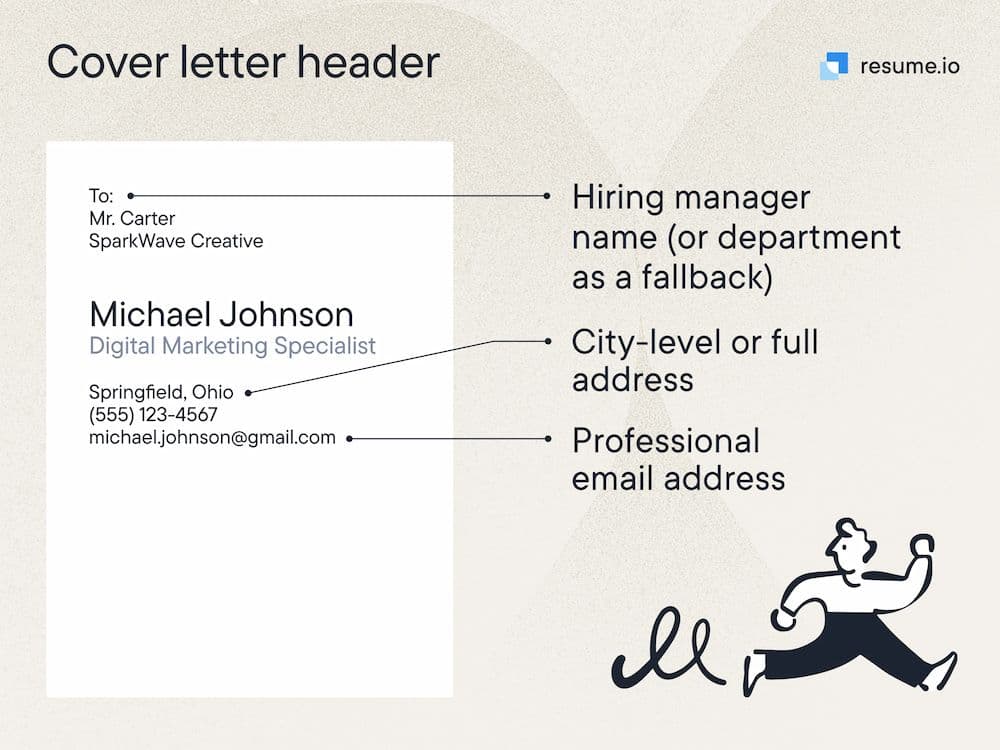
25. One easy way to set your cover letter apart is to address the hiring manager or recruiter by name. 26% of hiring managers say that this small detail goes a long way. (TeamStage)
26. A cover letter can be a powerful tool in your job search strategy. 83% of hiring managers say that a well-written cover letter can help candidates overcome a weak or generic resume. (Arcadia University)
27. Do not assume that an employer will always review your resume first. While some do, 36% of hiring decision-makers say they start with the cover letter. (Arcadia University)
28. You have a short window of time to get an employer's attention. About 37% of recruiters only spend 30 seconds reading a cover letter, while 15% say they spend two minutes or longer reviewing cover letters. (Jobera)
29. Around 38% of hiring managers pay closer attention to applications with cover letters. Make sure that your cover letter is focused, specific, and tailored to the role. (Zippia)
Can a cover letter get you an interview?
Yes — the data shows cover letters have a measurable impact on interview rates, especially when qualifications are otherwise similar.
30. You are 1.9 times more likely to land an interview if you include a cover letter with your application. When competing with applicants who have similar qualifications, a memorable or creative cover letter can make you stand out. (Jobscan)
31. In one survey, 80% of recruiters say they receive “junk” resumes on job boards, so they use cover letters to identify legitimate, qualified applicants. Take the time to craft both a targeted resume and a custom cover letter for your applications. (Tracy Saunders, BossmakeHer)
32. For every open job, employers get an average of 118 applications, but only 20% of applicants get an interview. A well-written cover letter can be your ticket to moving forward. (Interview Success Formula)
33. Half (50%) of hiring managers say that cover letters are useful for explaining career changes. (Arcadia University)
34. Recruiters also believe that cover letters can help candidates address employment gaps (49%) and showcase your professional achievements (47%). (Arcadia University)
35. An overwhelming majority of employers (87%) say they consider cover letters when deciding which candidates to invite for interviews. (Zety)
The future of cover letters
AI, video interviewing, and shifting recruiter expectations are reshaping how cover letters fit into hiring — but the data suggests they are not going away.
36. Many candidates are already using artificial intelligence (AI) to write their cover letters, and this trend is expected to continue. One survey found that 11% of applicants say they have used AI to create their cover letters. (Salt)
37. Based on another survey, it is likely that far more candidates are using AI in their job search. Around 65% of candidates say they have used this technology, including 20% who use AI to write their cover letters. (CNBC)
38. It is not just job seekers who are using AI. In 2025, 72% of HR professionals are now using AI in their hiring processes, up from 58 percent one year ago. (HireVue)
39. Most talent acquisition professionals (73%) believe that AI will fundamentally change the way companies recruit and hire employees. (LinkedIn)
40. Video interviewing continues to rise in popularity, with 63% of employers now using video in the hiring process. In the future, pre-recorded videos may accomplish the same goal as resumes and cover letters: introducing yourself to hiring managers. (LLCBuddy)
41. Nearly half of employers believe that a cover letter is still an essential part of job applications, even as trends like video and AI disrupt the traditional hiring process. In one poll, 43% said that applicants should submit cover letters. (Chris Morrison, Meritos)
General cover letter & job search statistics
Cover letters sit inside a larger job-search landscape — these broader statistics add context for how yours fits into the full application.
42. Finding a new job does not happen overnight. Recent data shows that the average job seeker spends 23.2 weeks searching for their next opportunity. A well-crafted cover letter has the potential to shorten your job search duration. (US Bureau of Labor Statistics)
43. Most resumes do not get past an applicant tracking system, with 75% being rejected before they reach a hiring manager. Make your cover letter and resume ATS-friendly with relevant keywords from the job description. (TopResume)
44. Over 70% of employees say they are open to new opportunities that come their way. Always have an updated version of your cover letter ready to go in case a recruiter reaches out unexpectedly. (TopResume)
45. One survey found that 78% of job seekers had lied at some point during the hiring process, including on resumes, in cover letters, and during interviews. Among those, 60% admitted they'd claimed to have skills they didn't actually have. (PRNewswire)
46. An unprofessional email address is a big turnoff for 35% of prospective employers. Your cover letter and resume header should have a professional email using a combination of your name or initials, such as firstname.lastname@email.com. (Motley Fool)
47. Including quantifiable metrics in your resume and cover letter can make you stand out from other applicants. Only 26% of candidates include some measurable data on their resumes. (Cultivated Culture)
48. The average job description contains 43 keywords that you can use on your cover letter and resume. (Cultivated Culture)
49. Hiring managers see buzzwords and jargon on many applications, saying that 51% of resumes contain these overused phrases. Keep your resume and cover letter free of cliches, like “team player” and “hard worker.” (Cultivated Culture)
50. Nearly all (93%) of hiring decision-makers want to assess candidates' skills to improve their quality of hires. Your cover letter and resume should emphasize the strengths, skills, and talents that you can bring to the role. (LinkedIn)
Cover letter best practices
Turn these cover letter statistics into a stronger application by following the practices below — each one maps directly to what hiring managers report they want.
Customize your letter
Do not send the same generic cover letter for every job — customization is one of the highest-impact changes you can make.
Before applying, take a few extra minutes to customize the letter to the role and employer. Mention the company's mission, recent projects, or values to show you have done your research. Our guide to writing a tailored cover letter walks through what to change for each application.
Address the hiring manager by name
Find the hiring manager's name and address your letter directly to them — it is a small detail that 26% of recruiters say makes a real difference.
Whenever possible, find the hiring manager's name and address your cover letter directly to them — for example, “Dear Melissa Stockton.” If you cannot find a name after searching, use “Dear Hiring Manager” rather than outdated greetings like “Dear Sir or Madam” or “To Whom It May Concern.”
Open with a strong introduction
Lead with your strongest relevant achievement — 41% of hiring managers say the introduction is the most important part of the entire letter.
The first paragraph of your cover letter should immediately capture a recruiter's attention. Open with an impressive professional achievement or metric that communicates your value from the first sentence.
Keep it concise
Keep your cover letter to one page — 70% of employers prefer half a page or less, and most recruiters spend under a minute reading.
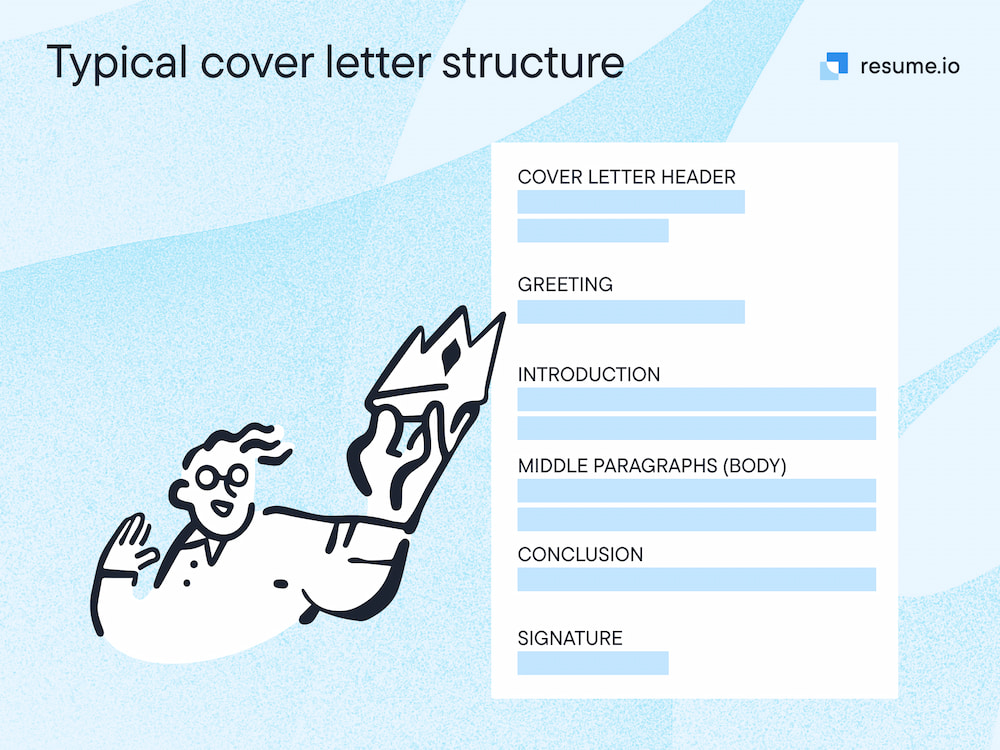
Hiring managers do not have time to read lengthy cover letters, so keep yours to one page. Most cover letters have three to four paragraphs for an introduction, a body, and a conclusion. See how long a cover letter should be for word-count targets.
Match the company's culture and tone
Adjust your tone to match the employer — a startup letter and a law-firm letter should not read the same way.
A tech start-up will have a very different environment than a legal office. Make sure your cover letter reflects the company's culture and tone. This extra step helps prospective employers see you as a good fit for their team.
Include a call to action
End with a clear invitation to connect — a confident close prompts the recruiter to respond rather than move on.
At the end of your cover letter, close with a clear call to action. Encourage the recruiter to contact you for an interview — for example, “I look forward to discussing my experience in more detail at an interview.”
Proofread carefully
Proofread before you submit — 58% of employers reject cover letters with obvious errors.
Before you send an email or hit submit on your application, proofread your letter carefully for grammar errors or spelling mistakes. Even small typos can take you out of the running, so make sure yours is clean and accurate.
Resources
- Jobscan.co
- LinkedIn.com (Josh Bob)
- TopResume.com (When Is a Cover Letter Necessary?)
- BossMakeHer.com
- Jobera.com
- TeamStage.io
- Arcadia.edu
- Zety.com
- Zippia.com
- TheLadders.com
- TwinEmployment.com
- ERINapp.com
- Interview Success Formula.com
- WeLoveSalt.com
- CNBC.com
- HireVue.com
- Business.LinkedIn.com
- LLCBuddy.com
- LinkedIn.com (Chris Morrison)
- BLS.gov
- TopResume.com (The Job-Search Statistics All Job Seekers Should Know)
- PRNewswire.com
- Fool.com
- CultivatedCulture.com
Tools & guides mentioned in this article
- AI Resume Builder
Build an ATS-ready resume with AI writing help and live preview.
- Resume Templates
Browse ATS-friendly layouts for every industry and career stage.
- Free ATS Checker
Upload your resume and get an instant ATS compatibility score.
- Career Advice Blog
More resume, ATS, and job-search guides from MakeResume.
Land 3x more interviews with AI.
Don't let your resume get stuck in an ATS. Build an optimized resume in minutes, then validate it with our free checker.